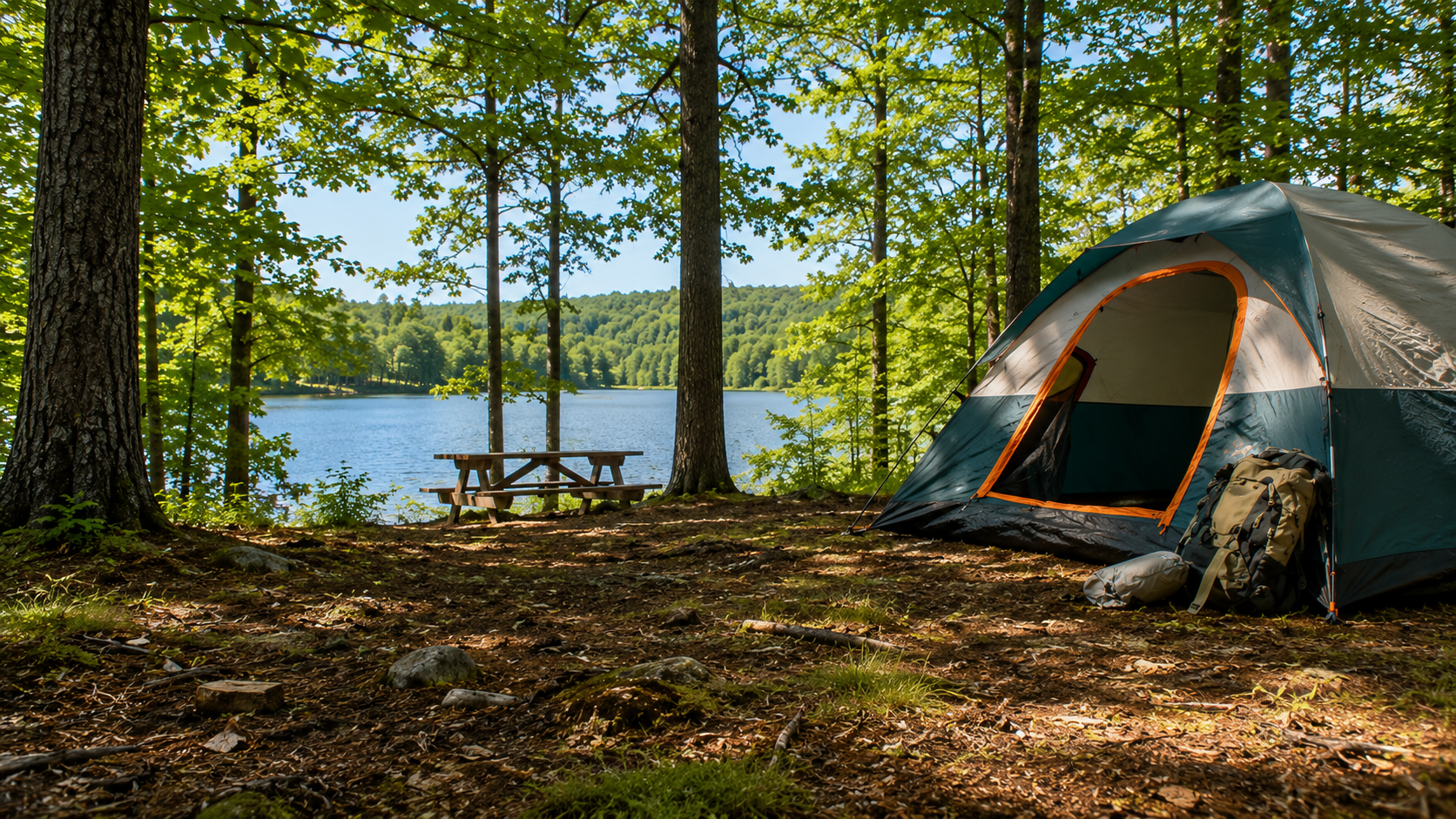
Safety Guide
Wisconsin Just Set a Lyme Disease Record. Here Is the Camper’s Playbook.
6,469 cases in 2024, all 72 counties affected. What a camper actually needs to know, what to pack, what to do at the site. From your camper advocate.
6,469 cases in 2024, all 72 counties affected. What a camper actually needs to know, what to pack, what to do at the site. From your camper advocate.
Your camper advocate did the homework on the 2026 Wisconsin tick situation so you do not have to. Built by a camper, for campers. May 2026.
You are heading out for a Wisconsin trip and somewhere in the back of your mind it is there. The tick thing. You have seen the Facebook posts. You have probably pulled one off a kid or a dog. And you are trying to figure out what to actually do about it this year.
Here is the short version, because that is what a camper packing for the weekend actually needs.
It is worse than it was. Not “news cycle” worse. Worse on the state’s own numbers. So the playbook needs to be sharper than it was a few years ago. Below is what the data says, what to pack, and what to do once you are at the site. From your camper advocate. No campground sponsors, no repellent brand deals, no spin.
Wisconsin Department of Health Services reported 6,469 Lyme disease cases in 2024, the highest year on record. Twenty-year case counts have quadrupled. The blacklegged tick that carries Lyme is now in all 72 counties, not just up north.
Anaplasmosis hit 780 cases, well above the ten-year average. Powassan virus, rarer but more serious, set a Wisconsin record with twelve cases and one death.
The DHS explanation, on the record: warmer winters mean ticks stay active longer. Shorter winter, longer active season, more counties affected. That is the trend. Sources at the bottom if you want to dig in.
And one quote worth reading twice, from Dr. Susan Paskewitz, the UW-Madison entomologist who chairs the CDC-funded Midwest tick research center:
“There is an idea that people in Wisconsin only get ticks when they go hiking in remote places. I don’t think that’s true. I think there are many people picking them up in their backyards.”
Translation for a camper: it is not just the deep trail. It is the grass next to your camper, the patch behind the playground, the path to the bathhouse. Plan accordingly.
Wisconsin has a bunch of tick species. You do not need to memorize them. There is one that matters for this article: the blacklegged tick, also called the deer tick. It is the one that carries Lyme disease, anaplasmosis, and Powassan.
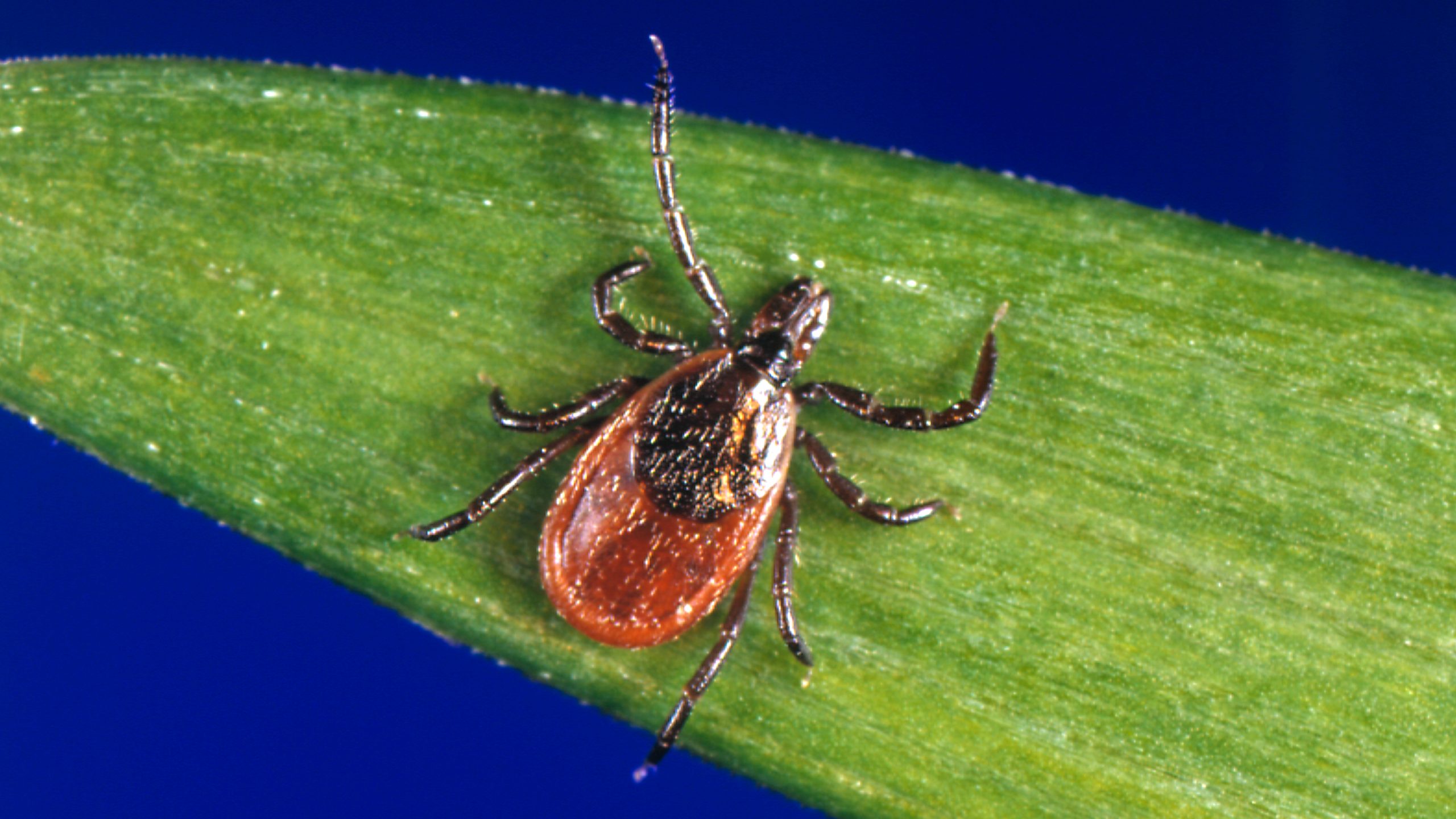
Image credit: Centers for Disease Control and Prevention (CDC)
A few things that help in the field:
If you find one attached, that is the one to act on fast (see “If a tick is already attached” below).
These are what your camper advocate would actually pack. Three chemical, two plant-based. I will be straight on tradeoffs.
As an Amazon Associate, TrustedCamp earns from qualifying purchases on the links below. The recommendations are based on EPA registrations and the published research. The links do not change the picks, and you pay the same either way.
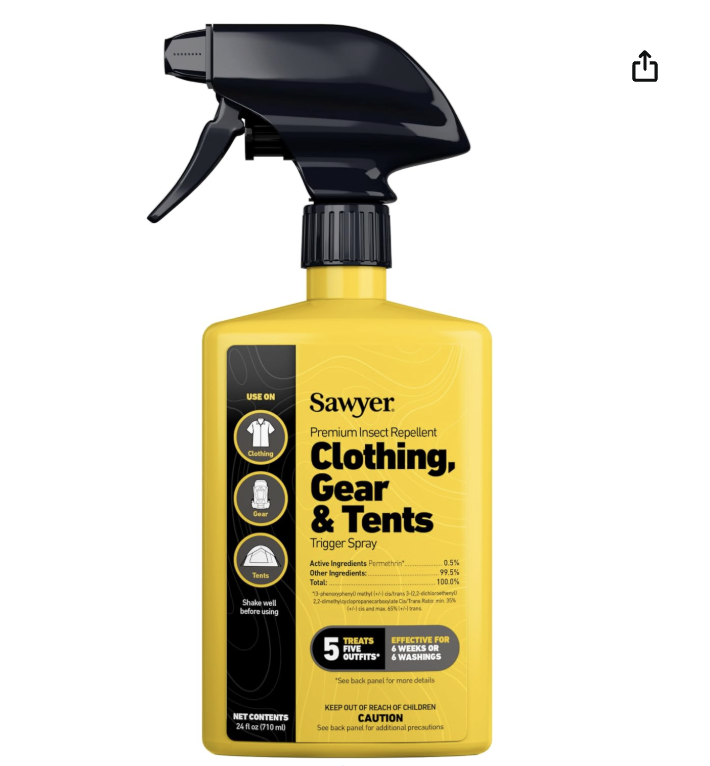
If you do one thing on this list, do this. Spray it on your clothes, shoes, socks, tent, camp chairs the day before the trip. Let it dry fully. For about six weeks or six washes, the fabric itself kills ticks on contact.
The number worth knowing: a 2011 study found people in permethrin-treated sneakers and socks were 73.6 times less likely to get a tick bite than people in untreated footwear. Not 7.3 times. Seventy-three point six.
Read that again. The thing that does the most work is not on your skin. It is on your shoes.
The CDC, the Wisconsin DHS, and Dr. Paskewitz at UW all recommend it as the first line of defense. Spray on clothing only, not skin (it does not bond to skin anyway). Let it fully dry. If you have a cat, keep the cat away from the wet treatment.
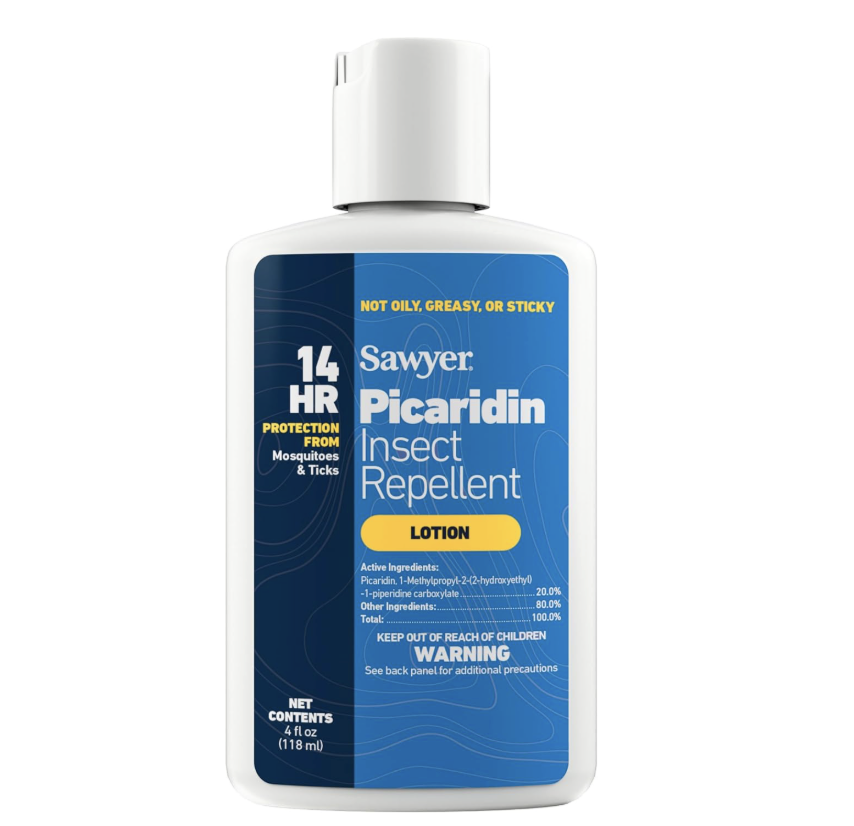
This is what I reach for on skin. Up to fourteen hours of tick and mosquito protection. Does not smell strong, does not melt plastic (sunglasses, watches, fishing line all fine). Wirecutter has it as their top pick. The Public Health Agency of Canada puts picaridin ahead of DEET for kids six months and up.
For families, this is the easier wear than DEET. Same effectiveness on ticks, less smell, no melted gear.
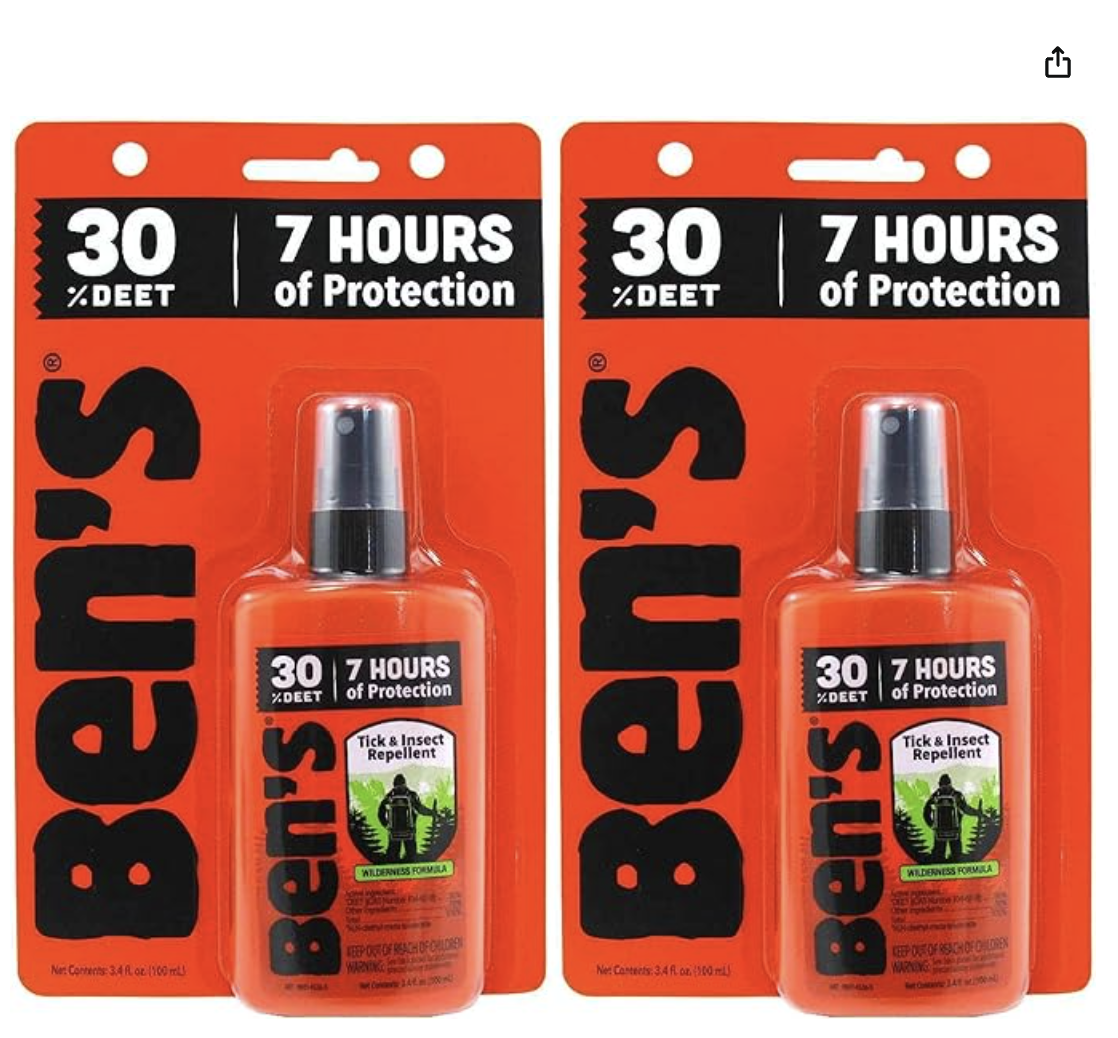
DEET works. Decades of testing. 30% is the sweet spot (higher concentrations just last longer, not stronger). Up to seven or eight hours per application. Grab this if you are going somewhere actively bad or out all day without a chance to reapply.
The honest part: DEET can damage plastics, has a smell, and some people just do not love it on skin. Safe when used as directed, including for kids over two months. But if you are with kids all day, picaridin is the easier wear.
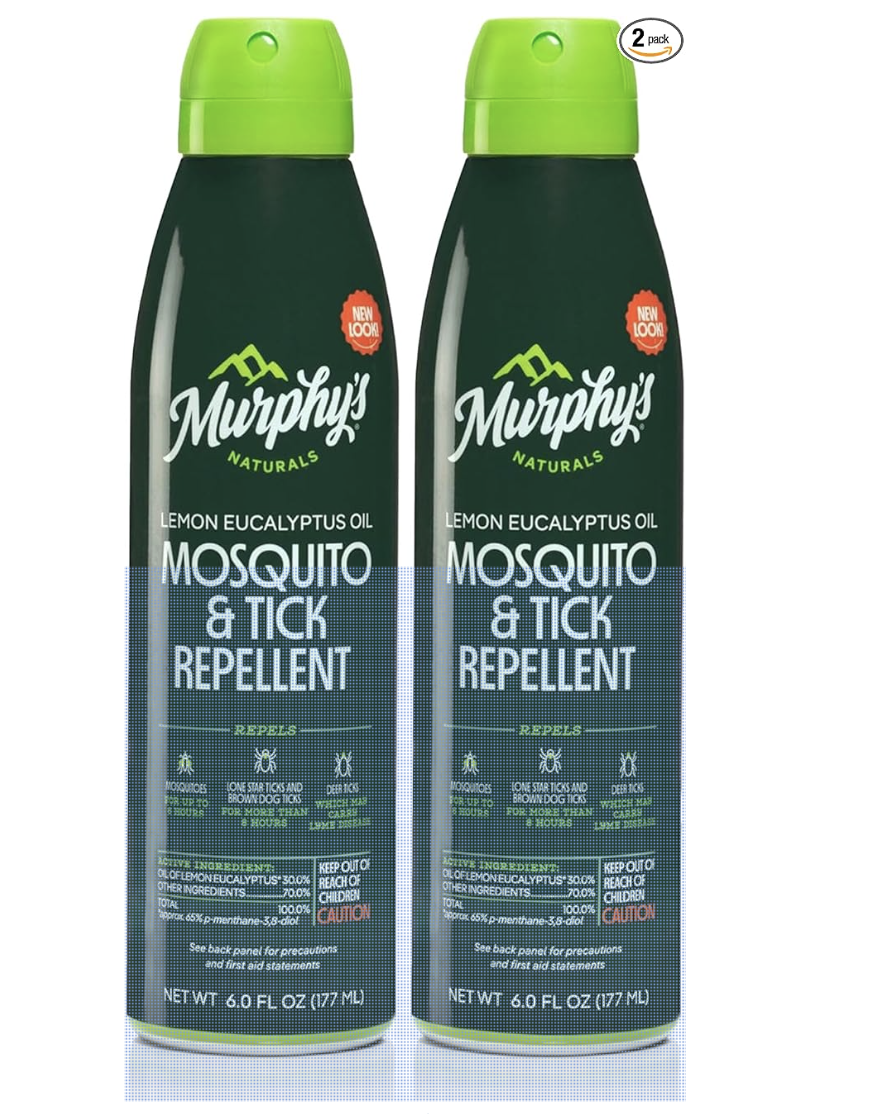
Here is where the natural-repellent category gets misleading and your advocate has to be straight with you.
Oil of lemon eucalyptus (OLE) is the only plant-based repellent on the CDC’s recommended list. EPA-registered, real active ingredient, it works. Murphy’s runs at the effective 30% concentration. Clean scent. Three ingredients.
Two catches the marketing will not tell you:
Also: “lemon eucalyptus oil” from the supplement aisle is not the same thing as EPA-registered OLE. The supplement version lacks the concentration of the active ingredient that does the work. Get the EPA-registered one or skip it.
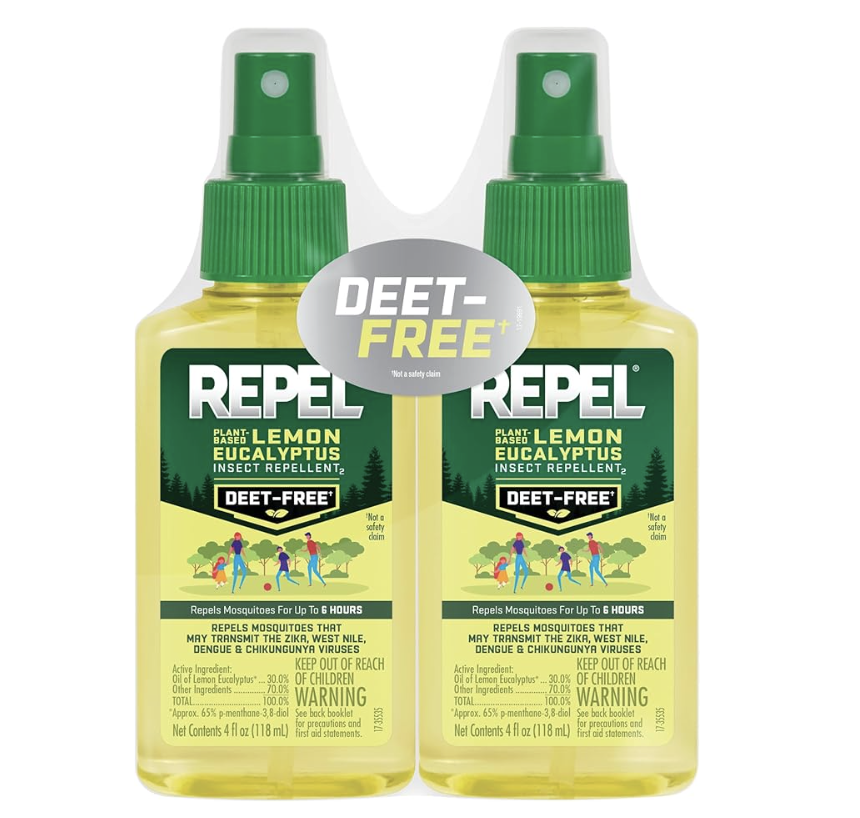
Same active ingredient, same effective concentration. Consumer Reports called it the best-performing DEET-free option in their testing. Easier to find at retail in a lot of stores. Same limitations as the Murphy’s.
The packing list is half the playbook. The other half costs nothing. State DHS, UW, and county parks all publish this and no campground booking page is going to tell you, so your advocate will.
The 24-hour window matters more than anything you do. A tick attached less than ~24 hours is unlikely to transmit Lyme. After 24 hours, the risk climbs. Daily checks catch them in time. Weekly checks do not.
First thing: if it has been more than 24 hours (or you do not know how long), call your doctor. A Wisconsin physician quoted by WPR said antibiotics are most effective at preventing Lyme when given within 24 to 72 hours of a bite. That window is short. Do not wait a week to call.
To remove the tick (Wisconsin DHS guidance, verbatim):
Watch for bullseye rash, fever, joint pain, fatigue, or facial droop in the 30 days after. Any of those, call your doctor. Not Google.
The Wisconsin tick picture in 2026 is not what it was a few years ago. Record Lyme year, longer active season, every county. The expert at UW says you can pick one up in your backyard. So the old “spray for the hike” thinking does not cover it anymore.
But you are not going to stop camping over it. Neither am I. Here is the whole playbook in one paragraph:
Treat your shoes and clothes with permethrin the day before the trip. Throw the picaridin in the bag for skin. Walk the middle of trails. Do real tick checks every night. If one is attached more than a day, call your doctor in the next 72 hours.
That is it. Stay sharp. Check the kids. Have a good trip.
As an Amazon Associate, TrustedCamp earns from qualifying purchases on the linked products. Recommendations are made independently of any affiliate relationship and are based on EPA registrations and published research. We recommend what we would use ourselves.
This article is informational, not medical advice. If you have concerns about a tick bite, contact a healthcare provider. The Wisconsin Department of Health Services and the CDC are the authoritative sources for current guidance.
Every campground. Same scoring. No sponsors.
Every campground we’ve scored with grades, trend signals, and years of data behind each one.
Browse All Campgrounds → © 2026 TrustedCamp. All Rights Reserved.
TrustedCamp aggregates and analyzes publicly available guest reviews from multiple public sources. All reviews, summaries, scores, and narratives reflect patterns observed in guest review data and represent the opinions of guests and customers, not the opinion of TrustedCamp or its affiliates. Content does not constitute statements of fact about individual operators or businesses. TrustedCamp is not affiliated with, endorsed by, or representing any campgrounds, parks, or businesses listed. All trademarks and property names remain the property of their respective owners.